
How many restrooms does a county fair need?
Start with expected attendance at peak, not total attendance across the run. A fair drawing 5,000 people over a single afternoon needs a different setup than the same 5,000 spread across three days. Our guide on how many porta potties you need walks through the math, but the short version: fairs lean on food, alcohol, and heat, all of which push usage well past OSHA's construction-site baseline. OSHA 1926.51(c) sets 1 toilet for 20 workers on a jobsite, but a fairground crowd cycles through units far faster than a static crew does, so organizers in Miami Gardens typically plan closer to 1 unit per 75 to 100 guests for a food-and-drink event. Standard units run priced by the day, week, or event block, and a multi-day fair often prices out cheaper on an event rate than three separate daily rentals. Add ADA accessible units into that count from the start, since retrofitting halfway through a fair weekend means a second delivery truck and lost setup time. If your fair includes a beer garden or a fried-food row, budget extra units near that zone specifically, because that's where lines form fastest and where a shortage gets noticed by every vendor around it.
What restroom mix works best for a fair layout?
Mix standard units with a few deluxe flushable stations near VIP or sponsor areas, and cluster everything so nobody walks more than a couple hundred feet. Deluxe flushable units run a step up in comfort and work well near grandstands or ticketed sections, while standard units handle midway and vendor rows. For a fair with a headline act or grandstand concert, a restroom trailer gives sponsors and staff a flushing, climate-controlled option, and the 4 stall or 8 stall configurations scale with crowd size. ADA Standards section 213.2 requires at least 5 percent of clustered single-user units be accessible, never fewer than one, so a bank of twenty units needs at least one ADA-compliant stall built into the layout, not added as an afterthought. Each unit needs a stable, level pad, since ADA Standards section 302.1 calls for firm, slip-resistant ground at accessible units, which matters on grass fairgrounds after a Florida downpour. Pair restrooms with handwashing stations at food court entrances; 29 CFR 1910.141(d)(2) requires soap and towels or a hand-drying device at washing facilities, and sanitizer alone does not meet that standard. If your fair uses food trucks with fryers, ask about portable sinks sized for vendor handwashing between service.
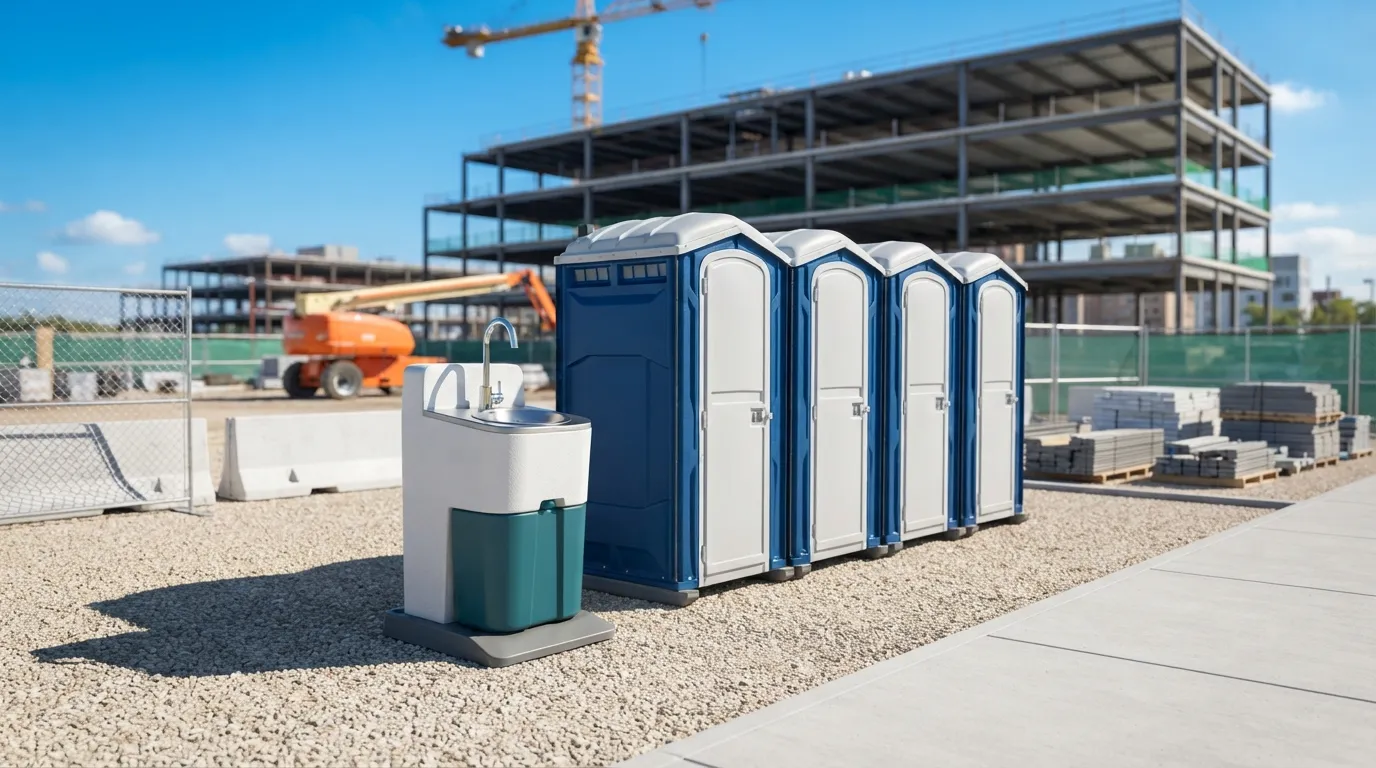
Where should restrooms go on a fairground layout?
Place restrooms at every major crossing point, not just the perimeter, so nobody has to cut across a packed midway to find one. Delivery trucks need roughly 60 feet of straight clearance behind the vehicle to unload safely, which matters on fairgrounds with tight service roads or parked vendor trailers. Our placement guide covers ground surface, shade, and distance from food booths in more detail. Keep units off gravel or soft turf where possible, since a 44 by 48 inch unit needs firm footing to stay upright in wind, and Miami Gardens sees its share of summer thunderstorms during fair season. If the fairground borders a public street, confirm placement in the right of way with the city before final layout; that rule is not something to guess on. Fencing around generator areas and dumpster zones keeps foot traffic clear; a temporary fence rental using chain link panels works for both crowd control and equipment security, and ANSI D6.1-conforming barricades under OSHA 1926.202 apply if your event straddles an active work zone. For overnight fairs, add a light tower near restroom clusters so paths stay lit after dark. Waste from food vendors adds up fast too, so a roll-off dumpster or two near the vendor row keeps grease and packaging from piling up between pickups, especially since fried-food trailers generate more trash volume than most organizers expect.
Miami Gardens fairs draw from a wide radius, including guests coming from Opa-locka just 4.3 miles south and Miami Lakes 7.4 miles southwest, so parking overflow and restroom placement near satellite lots matters as much as the main grounds. Coordinate delivery timing with event restroom rental planning early, since fair weekends compete with weddings and festivals for the same trailers and trucks across the region.
How far in advance should I book restrooms for a county fair?
Book 4 to 6 weeks out if possible, longer for a multi-day fair needing trailers. Restroom trailers and ADA units book up fastest since inventory is limited. A request for quote locks in your date and unit count before vendor season fills the schedule.
Do county fairs need ADA-compliant restrooms?
Yes. ADA Standards section 213.2 requires at least 5 percent of clustered units be accessible, minimum one. Pair that with a 60 inch turning circle per section 304.3.1 near the unit pad, and make sure the accessible route stays at least 36 inches wide per section 403.5.1.
How often do restrooms get serviced during a multi-day fair?
Daily service is standard for high-traffic fairs, sometimes twice daily near food courts. ANSI/PSAI Z4.3 sets a baseline of one visit per week for light use, but fair crowds run far heavier, so service frequency gets scheduled around your actual attendance curve.
What size restroom trailer works for a fair with a main stage?
An 8 stall trailer handles larger crowds near a main stage or grandstand, while a 2 stall suits smaller sponsor tents. Match trailer size to expected peak-hour traffic near that specific zone, not total fair attendance.
Can I add handwashing stations without full restroom trailers?
Yes. Standalone handwashing stations work well at food vendor rows and entrance gates. They satisfy 29 CFR 1910.141(d)(2) soap-and-towel requirements without the cost of a full trailer, and they set up fast along fence lines or midway entrances.
Next step
Get a delivery date
Tell us the address, the dates and the headcount. We size the order and confirm the route.