
What Does OSHA Require for Farm Restrooms?
Under OSHA 1928.110, agricultural employers with hand-labor crews need potable water, toilets, and handwashing available within a quarter mile walk of where people are working, figured at one facility per 20 employees. That is a stricter walking distance than most construction rules, because field crews spread out over acreage instead of clustering around one building pad. Miami Gardens Porta Pros places standard portable toilets at the edges of active rows or grazing sections so the quarter-mile line holds even as work moves across a property. A single standard unit carries a 60 to 70 gallon holding tank and stands about 92 inches tall, which is enough capacity to run a small crew through a full week between services under the ANSI/PSAI Z4.3 baseline interval of one visit per week for up to 10 users over a 40-hour week. Bigger crews or longer harvest windows call for more units or tighter service cycles, not bigger tanks. We also handle handwashing station rental placement alongside the toilets, since the two are supposed to travel together under the same reach requirement. If your crew is spraying herbicide or insecticide, that triggers a separate rule: OSHA 1926.51(f)(1) requires washing facilities specifically for workers applying paints, coatings, herbicides, or insecticides, on top of the general sanitation setup. Farms mixing chemical applications with regular field labor usually need both covered, and we can walk through which units satisfy which requirement before delivery.
How Many Units Does a Farm Property Need?
Unit count depends on crew size and how far people range from the road, not on acreage alone. A 15-person picking crew working one field is a different setup than the same 15 people spread across three parcels a half mile apart. We size it against the quarter-mile rule in OSHA 1928.110 and place units so nobody has to walk further than that to reach one, which sometimes means splitting one big order into two or three smaller drop points instead of one row of toilets by the barn. For agricultural sites near Miami Gardens with mixed labor and light equipment work, we've delivered combinations of standard porta potty rental units alongside a portable sink rental for handwashing near packing or sorting stations. Farms running seasonal help sometimes need a unit for eight weeks and nothing after, which is where monthly porta potty rental pricing works out cheaper per week than booking short stretches back to back. If the crew works past dark for early harvest starts, that is a lighting question too, not just a restroom one, and we can point you toward light tower rental for the same delivery run.
Where Should Restrooms Sit on a Farm Property?
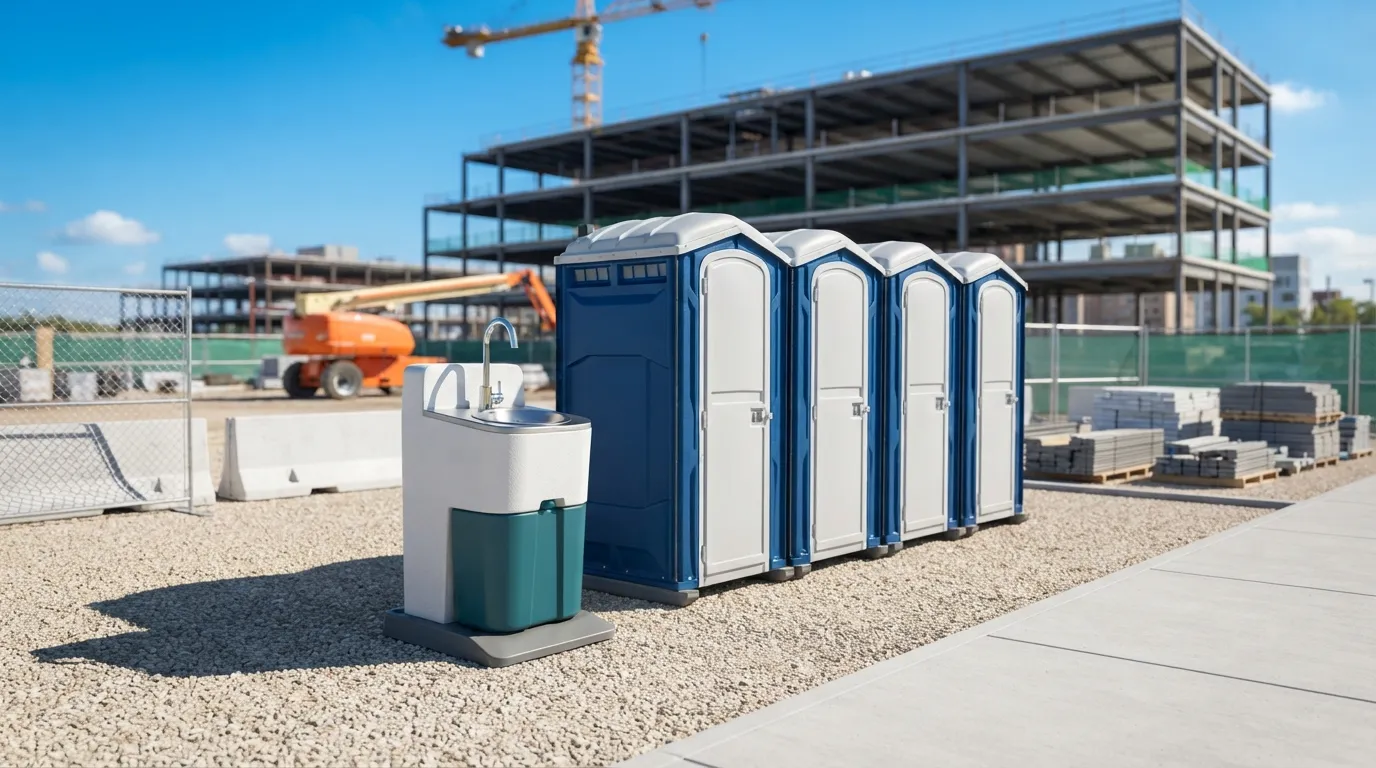
Restrooms belong on stable, firm ground near the active work zone, not tucked behind equipment sheds where nobody uses them. ADA Standards 302.1 calls for floor and ground surfaces that are stable and slip resistant, and while that standard targets accessible routes specifically, it is good practice for any unit placement on soft farmland after rain. We check access before delivery: our trucks need roughly 60 feet of straight clearance to set a roll-off dumpster rental or a restroom unit without repeated repositioning, which matters more on farm roads than paved lots. If a property runs cattle or produces livestock waste alongside crop work, a septic pumping service or a holding tank rental might belong in the same delivery as the toilets, especially for a property without a tie-in to municipal sewer. Farms near Opa-locka, about 4.3 miles south of Miami Gardens, and Miami Lakes, roughly 7.4 miles southwest, fall inside our regular delivery loop, so route planning rarely adds a surcharge. For farms running events, like a fall pumpkin patch or a seasonal market, restroom needs shift toward visitor counts instead of labor counts, which is closer to what we cover under farm and agricultural restrooms for public-facing operations and county fair restrooms for larger gatherings.
| unit | duration | typical price |
|---|---|---|
| standard | week | 200 |
| standard | month | 200 |
| delivery_fee | week | 100 |
Prices above sit inside our measured range across service calls; final quotes depend on unit count and how far units sit from the main road. See porta potty rental cost for a fuller breakdown by duration.
How often do farm restrooms get serviced?
The baseline under ANSI/PSAI Z4.3 is one visit per week for up to 10 users over a 40-hour week. Bigger crews or hot months usually need twice-weekly service to keep tanks from filling early. We adjust the schedule once we see actual crew size on site.
Do farm restrooms need a permit in Miami Gardens?
Placement rules depend on where the units sit relative to the property line and any public right of way, and that needs confirming with the city before delivery. We check this on every quote rather than assume. See porta potty permit requirements for what we typically ask about.
Can one unit serve multiple field locations?
Not under the quarter-mile rule in OSHA 1928.110. If crews spread across parcels more than a quarter mile apart, you need a unit at each cluster, not one central unit for the whole property. We map this out during the site visit.
What if our crew sprays pesticides?
That triggers OSHA 1926.51(f)(1), a washing-facility requirement specific to herbicide, insecticide, paint, and coating work, separate from general field sanitation. We can add a handwash station sized for that use case; see hand sanitizer station rental for the lighter-duty option.
How far will Miami Gardens Porta Pros deliver to a farm property?
We regularly serve properties toward Opa-locka, 4.3 miles south, and Miami Lakes, 7.4 miles southwest, without added delivery fees. Farther routes, like Plantation at 13.1 miles north, are still workable; ask when you request a quote.
Next step
Get a delivery date
Tell us the address, the dates and the headcount. We size the order and confirm the route.