
How Fast Can You Deliver After a Storm?
Storm response is different from a normal rental. Trucks stage before landfall when the forecast allows it, and crews move the moment roads clear. A standard porta potty rental is the fastest unit to place, and most disaster orders in Miami Gardens go out same day or next morning once access is confirmed. If a shelter, church, or command post needs more than one unit, our emergency porta potty rental line handles the call differently than a routine booking, prioritizing sites with displaced families or active relief operations.
Distance matters when every crew is stretched thin. We already run routes into Opa-locka, 4.3 miles south, and North Miami Beach, 7.2 miles east, so a mutual-aid shelter in either direction is not a special trip. Miami Lakes sits 7.4 miles southwest, and we have staged units there during past flooding. A delivery fee applies on top of the unit rate, and weekend or storm-window deliveries lean toward the higher end of that band because crews are working overtime and roads may be partly blocked.
Flooded septic systems are their own emergency. If a residential tank has backed up, that is a septic pumping service call, not a toilet rental, and it should happen before the tank contaminates a yard or a storm drain.
What Sanitation Do Shelters and Relief Sites Actually Need?
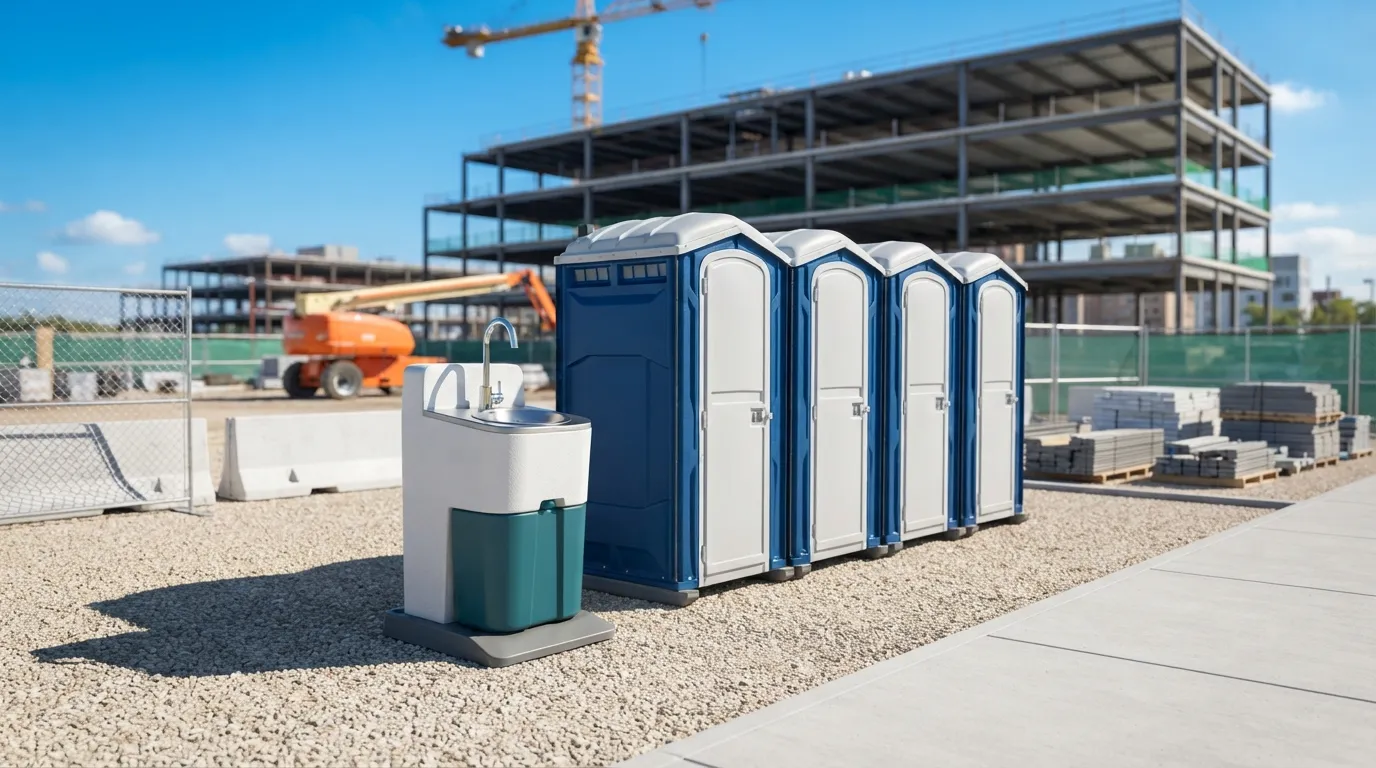
Shelter sanitation follows the same headcount logic as a job site. OSHA 1926.51(c) sets 1 toilet for every 20 people on a crew, and that ratio is a reasonable planning floor for a relief site too: a shelter housing 60 people needs a minimum of 3 units, more if meals are served on site. Our how many porta potties do I need guide walks through the math for larger counts.
Water service is often the first thing to fail in a storm. OSHA 1926.51(a)(1) requires an adequate supply of potable water at any place of employment, and a shelter kitchen or medical tent runs on the same principle. A handwashing station rental or a portable sink rental covers that gap, and 29 CFR 1910.141(d)2) is specific that soap and towels or a hand-drying device are required. Hand sanitizer alone does not satisfy it. If cleanup crews are using disinfectants or pesticide sprays afterward, OSHA 1926.51(f)(1) requires washing facilities for that contaminant exposure specifically.
Accessible relief sites need one accessible unit minimum. ADA Standards 213.2 requires at least 5 percent of clustered single-user toilets to be accessible, never fewer than one, and our ADA accessible porta potty meets the clear width and turning space specs shelters are asked about. For a longer-term shelter operation, a restroom trailer rental or a 4 stall restroom trailer handles higher traffic better than single units spread across a parking lot.
Where Do the Toilets and Debris Go During Cleanup?
Cleanup generates debris fast, and disaster debris piles need somewhere to go that is not the curb indefinitely. A roll-off dumpster rental is the standard answer, and a 20 yard dumpster rental handles most storm-damaged drywall, flooring, and downed branches from a single property. Larger relief sites coordinating multi-household cleanup often need a 30 yard dumpster rental or a 40 yard dumpster rental staged near the collection point. Know what cannot go in a dumpster before loading it, since propane tanks, batteries, and certain chemicals get rejected at the landfill and delay the whole haul.
Delivery access matters here too: a roll-off truck needs about 60 feet of straight clearance behind it, which can be tight on a flooded or debris-choked street in Miami Gardens. Crews scout the approach before the truck rolls.
Displaced households sometimes need somewhere secure to store salvaged belongings while repairs happen. A storage container rental or a 20ft storage container keeps furniture and records dry and locked while a home dries out. For relief command posts that need fenced-off staging or equipment security, a temporary fence rental keeps volunteers and the public out of active work zones, and crowd control barrier rental helps manage lines at distribution points.
How much does emergency sanitation cost during a disaster?
Pricing follows normal bands even in a storm response: a standard unit runs $100 to $350 a day, and delivery adds $100 to $500 depending on distance and timing. Weekend or storm-window delivery can run higher because of overtime. Request a firm number through request a quote before committing.
Do you deliver before a hurricane makes landfall?
Yes, when road conditions and driver safety allow it. We stage units ahead of forecast storms for known shelters and repeat commercial accounts. Once wind advisories close roads, delivery has to wait until they reopen, so early booking matters more than usual.
Can a shelter get an ADA unit on short notice?
Usually, yes. ADA Standards 213.2 requires at least one accessible unit per cluster, and we keep ADA stock separate from general inventory for exactly this kind of request. Call ahead so one is held for the shelter rather than assigned elsewhere.
What happens if a septic tank floods or backs up?
Call for pumping immediately rather than waiting. A flooded tank can push sewage back into a home, and our septic pumping service crews prioritize backup calls over routine maintenance during active flooding events in Miami Gardens.
How do I request emergency service outside normal hours?
Use emergency porta potty rental or call directly through contact. After-hours and weekend response exists specifically for storm and flood situations, and dispatch will ask for site access details up front to move faster.
Next step
Get a delivery date
Tell us the address, the dates and the headcount. We size the order and confirm the route.