
How Do Porta Potties Work On A Job Site?
A construction worker walking to a porta potty on a busy site in Miami Gardens isn't thinking about the mechanics underneath him, and he shouldn't have to. Under the seat sits a holding tank, usually 60 to 70 gallons, built into a unit that stands about 92 inches tall and measures roughly 44 by 48 inches on the ground. Each use drops waste into that tank, where a blue chemical solution breaks down solids and locks in odor between service visits. A vent stack pulls gas up and out, away from the seat area. OSHA 1926.51(c) sets the ratio: one toilet for 20 workers or fewer on a construction site, scaling up from there as headcount grows. That's the standard behind most standard porta potty rental setups on active builds. Crews juggling multiple trades often ask how many porta potties do I need before they order, and the honest answer depends on worker count and shift length, not guesswork.
How Does A Flushable Porta Potty Work?
A flushable unit uses a small onboard freshwater tank and a foot pump or hand lever to push a rinse of water through the bowl after each use, dropping waste into a separate holding tank below. That separation, fresh water on one side, holding tank on the other, is what makes a deluxe flushable porta potty feel closer to a real bathroom. Some deluxe models add a sink with its own small reservoir, so users get an actual flush and a rinse instead of just a chemical tank. These units run more than a standard model because of the added plumbing, and they're common at weddings and corporate events booked through event restroom rental or wedding restroom rental packages. An ADA accessible version follows the same flush mechanism but adds space: ADA Standards section 304.3.1 calls for a 60 inch turning circle inside, and section 404.2.3 sets minimum door width at 32 inches, both built into every ADA accessible porta potty Miami Gardens Porta Pros delivers.
How Does A Portable Sink Work?
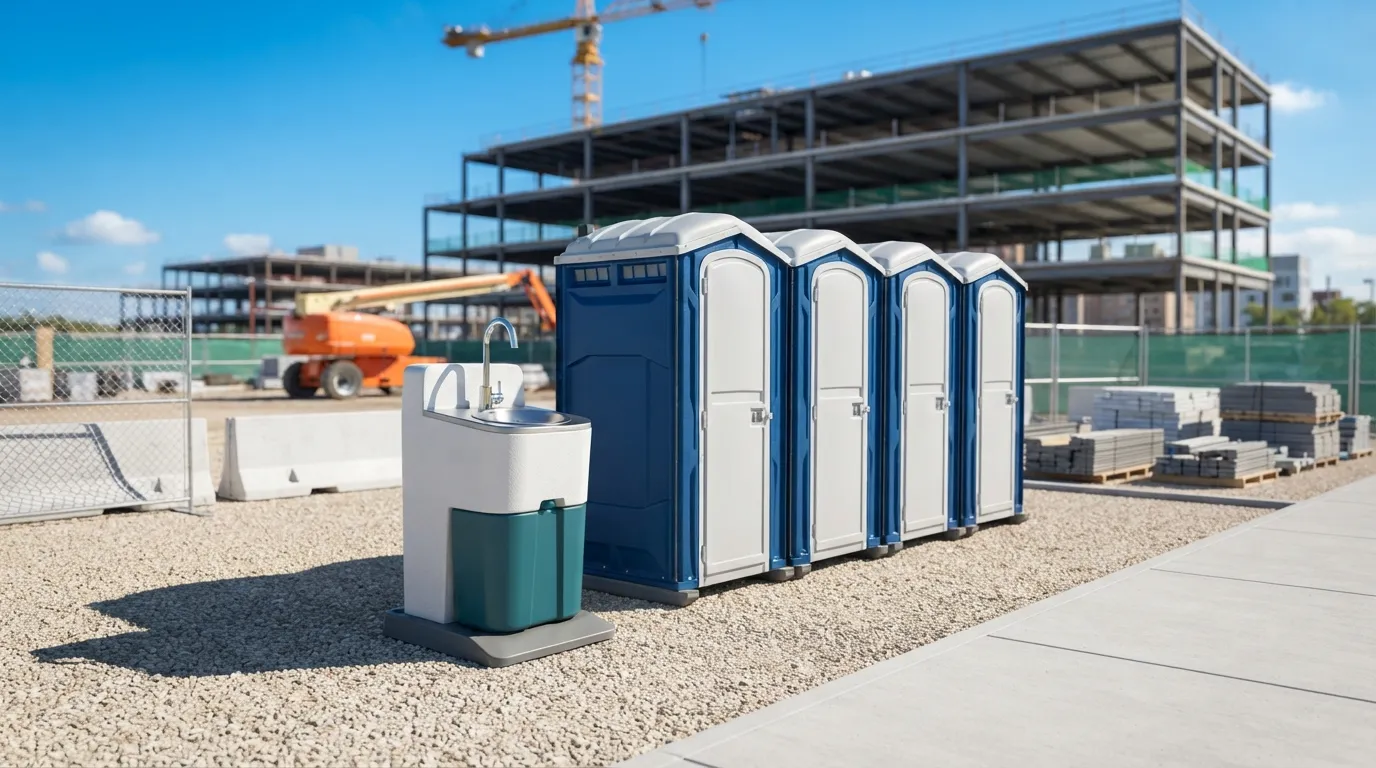
A portable sink runs on a self-contained system: a freshwater tank feeds the faucet, usually by foot pump or gravity, and a separate greywater tank underneath catches the runoff so nothing drains onto the ground. No hookup to a building, no hose to a hydrant. Fill the fresh tank, empty the grey tank, that's the whole cycle. Under 29 CFR 1910.141(d)(2), washing facilities need soap and a way to dry hands, hand sanitizer doesn't count as a substitute, which is why a handwashing station rental always pairs soap dispensers with the water tank. Crews using paints, coatings or pesticides trigger a stricter rule: OSHA 1926.51(f)(1) requires washing facilities specifically for workers handling those contaminants. A portable sink rental satisfies both the general requirement and the contaminant-specific one, and it's a common add-on for painting crews and demo teams working sites across Miami Gardens.
How Do Camping Porta Potties Work?
A camping or event-grade unit works the same way as a job site model, sealed tank, chemical treatment, vented stack, just scaled and placed differently. At a weekend festival or a campground, service trucks can't always reach every unit daily, so the chemical does more of the lifting between pump-outs. ANSI/PSAI Z4.3 sets the baseline service interval at once a week for up to 10 users across a 40 hour week, though high-traffic weekend events usually get serviced more often. That's the logic behind festival restroom rental and camping porta potty planning: more users per unit means a shorter interval between visits, not a bigger tank. Placement matters too. ADA Standards section 403.5.1 calls for a 36 inch clear path to any accessible unit, something worth checking against a porta potty placement guide before delivery day. Renters comparing costs across unit types and durations can check the porta potty rental cost breakdown or look at porta potty rental per day pricing before booking.
| unit | day | week | month |
|---|---|---|---|
| standard | $100-$350 | $130-$500 | $125-$325 |
| ada | $200-$400 | $240-$400 | -- |
| deluxe | $85-$1200 | $150-$290 | -- |
Longer jobs often shift to a monthly porta potty rental once the math favors it over daily or weekly rates. For multi-service jobs, pairing units with a roll-off dumpster rental or a temporary fence rental is common on active construction sites, and some builds near Opa-locka, 4.3 miles south, or Miami Lakes, 7.4 miles southwest, coordinate delivery of both on the same truck run.
Do porta potties smell?
Not when serviced on schedule. The blue chemical solution controls odor by breaking down waste and masking gas at the vent stack. Smell usually means a missed service interval, not a failure of the unit itself. See do porta potties smell for what affects odor most.
What chemicals go into a porta potty?
A non-toxic, biodegradable blue deodorizer treats the holding tank, breaking down solids and controlling bacteria growth between pump-outs. It's not the same as septic tank cleaning chemicals used in a home system. Service trucks carry the correct portable toilet chemicals for each visit.
How often are porta potties serviced?
ANSI/PSAI Z4.3 sets a baseline of once weekly for up to 10 users over a 40 hour week. High-traffic construction sites or weekend events typically need more frequent visits. Check how often are porta potties cleaned for specifics by use case.
Do I need a permit to place a porta potty in Miami Gardens?
Placement in the public right of way needs confirming with the city before delivery. Miami Gardens Porta Pros can walk through placement options, but permit rules should be verified locally. See porta potty permit requirements for more.
How is a porta potty different from a septic tank?
A porta potty is a self-contained unit pumped on schedule; a septic tank is a fixed underground system, typically pumped every 3 to 5 years depending on size and household use. For home systems, see septic pumping service or how often to pump a septic tank.
Next step
Get a delivery date
Tell us the address, the dates and the headcount. We size the order and confirm the route.